You open the cafe at 6am. You pull up your personal Spotify account, tap a playlist called "Morning Jazz," and let it play through a Bluetooth speaker behind the counter.
You've been doing this every day for three years.
You're breaking the law.
Not in a "jaywalking" kind of way. In a "$30,000 per song" kind of way. And the people who enforce it aren't bluffing.

What Spotify's Terms Actually Say
Spotify's Terms of Service are explicit:
"The Spotify Service is not for commercial use... you may not make it available to other people."
That means playing Spotify in any business — cafe, restaurant, bar, salon, gym, retail store — violates your agreement with Spotify. It doesn't matter if you're paying for Spotify Premium. The license covers personal, private listening only.
Apple Music, YouTube Music, Amazon Music, Tidal — they all have the same restriction. Consumer streaming services are not licensed for commercial use. Period.
The Enforcement Machine You Don't See
Three organizations enforce music licensing in the United States:
- BMI (Broadcast Music, Inc.)
- ASCAP (American Society of Composers, Authors, and Publishers)
- SESAC (now operated by Anthem Entertainment)
These are called Performing Rights Organizations (PROs). They represent songwriters and publishers. Their job is to make sure anyone who plays music publicly pays for the right to do so.
Here's how they find you:
They send people into your business.
BMI and ASCAP employ field researchers — real people who walk into restaurants, cafes, and retail stores, sit down, and listen. They use apps like Shazam to identify songs. They document the date, time, business name, and what was playing.
If you're playing copyrighted music without a license, you'll receive a letter. Then a follow-up. Then a legal notice.

The fines are real.
Under the U.S. Copyright Act, statutory damages range from $750 to $30,000 per song. For willful infringement, that number jumps to $150,000 per song.
A Florida bar was sued by BMI for $30,000 over a single song. A restaurant chain in Texas settled for over $90,000. These aren't hypotheticals — they're public court records.
Maximum fine per song under the U.S. Copyright Act for non-willful infringement. Willful infringement can reach $150,000 per song. Playing a 20-song playlist without a license? That's up to $600,000 in potential liability.
1,166 tracks, AI-curated for your space. From $12.50/mo.
"I'll Just Get a License" — It's Not That Simple
You might think: fine, I'll get a BMI license and keep using Spotify.
That doesn't work either.
Even with a PRO license, Spotify's terms still prohibit commercial use. The PRO license covers the right to publicly perform the compositions (the songs as written). But Spotify's recordings are separately licensed and restricted to personal use.
To legally play music in your business, you need:
- A PRO license from BMI and ASCAP and SESAC — yes, all three, because different songs are registered with different PROs.
- A commercial music source — a service that actually licenses its recordings for business use.
The cost breakdown:
| License | Annual Cost |
|---|---|
| BMI business license | $250 – $500 |
| ASCAP business license | $300 – $600 |
| SESAC business license | $200 – $400 |
| Commercial music service | $200 – $480 |
| Total | $950 – $1,980/year |
For a small cafe doing $200K in revenue, that's 0.5–1% of gross — just for background music.
What Most Business Owners Actually Do
Let's be honest. Here's what the data says:
78% of businesses that play music are doing so without proper licensing. (National Federation of Independent Business, 2024)
Most small business owners don't know they need separate licenses. They assume their Spotify subscription covers it. It doesn't. And by the time they find out, they've usually received a letter.
The common responses:
- "I'll just turn the music off." — Silence kills ambiance. Studies show background music increases dwell time by 15–30% and average spend by 9%.
- "I'll play royalty-free music from YouTube." — Most "royalty-free" YouTube channels aren't actually royalty-free for commercial use. Read the fine print.
- "I'll use a business music service." — This is the right answer. But many charge $25–40/month on top of PRO fees.
Tired of reading about licensing headaches? Try Puana free — legal music in 30 seconds.
The Simpler Alternative

I ran into this exact problem at my own cafe in Charlevoix, Michigan.
Every morning, I'd spend 20 minutes trying to find the right music. I did the responsible thing — I paid for Soundtrack Your Brand at their premium tier. $500 a year. The music was fine, but the app was clunky, the selection felt limited, and I had to pay extra per device. For a small seasonal cafe, that cost adds up fast.
I knew there had to be something better. So I built Puana.
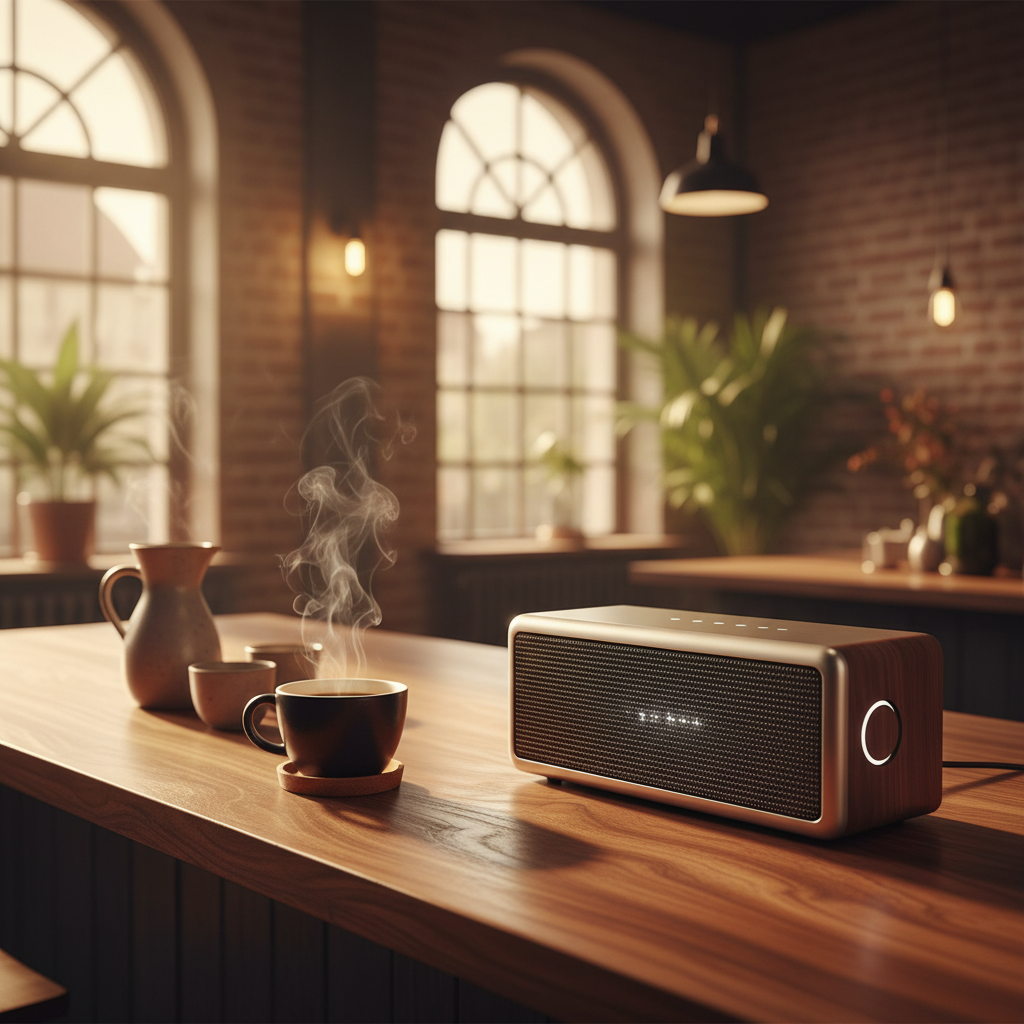
Puana is 1,166 tracks of original, AI-generated music — studio-quality, designed specifically for business environments. Because every track is original and not registered with any PRO, you don't need a BMI, ASCAP, or SESAC license. Your Puana subscription is the only cost.
Here's what that looks like:
| Approach | Annual Cost | Licensing Risk |
|---|---|---|
| Spotify (no license) | $120 | High — $30K+ per song |
| Spotify + all PRO licenses | $870 – $1,620 | Medium — Spotify TOS still violated |
| Soundtrack Your Brand (premium) | $500 – $1,500+ | Low |
| Puana | $150/year | None — fully licensed, no PROs needed |
Every Puana subscriber gets a downloadable commercial license certificate. If a PRO auditor walks into your business, show them the certificate. Every track is original, royalty-free, and commercially licensed. End of conversation.
Commercial license certificate included. Show it to any auditor.
What To Do Right Now
If you're currently playing Spotify in your business:
- Stop. Seriously. The risk isn't theoretical.
- Check your mail. If you've received a letter from BMI, ASCAP, or SESAC, don't ignore it. Respond promptly — ignoring it escalates the situation.
- Switch to a commercial music service. Whether it's Puana or a competitor, get legal. The cost of compliance is a fraction of the cost of a single fine.
- Keep the receipt. Make sure whatever service you use provides a license certificate or commercial use agreement you can show to auditors.
Music makes your business better. Playing it legally shouldn't be this complicated — but right now, it is. The system is broken. Until it changes, protect yourself.
Jesse Meria is the founder of Puana and the owner of Cafe Meria in Charlevoix, Michigan. He built Puana after spending three years overpaying for business music services that never quite fit.