Of all the questions small businesses ask about music, this is the one with the most surprising answer. Not because the answer is no. Because the answer is frequently yes — and almost nobody who repeats that yes understands the shape of it.
There is a genuine, free, statutory exemption that lets many US businesses play broadcast radio without paying anyone. It has been law since 1998. And the two things most commonly said about it are both wrong.
The whole exemption turns on this object — not on the size of your room. Photograph: Y / Pexels.
The exemption is real
In 1998 Congress passed the Fairness in Music Licensing Act, adding what is now 17 U.S.C. §110(5)(B) to the Copyright Act. It carves an exception into the public performance right for smaller food service, drinking, and retail establishments.
If you qualify, you owe nothing. No licence, no letters, no fee. It is one of the few places in copyright law where a small business is simply handed a pass.
Wrong idea #1: “you have to be small and have few speakers”
This is the version nearly every article prints, and it misreads the statute.
The size threshold and the equipment limits are alternatives, not a checklist. The statute says either the establishment has less than the threshold square footage, or it has that much space or more and stays within the equipment caps.
So there are two separate doors:
Door one — you are under the size threshold. Food service and drinking establishments: under 3,750 gross square feet, excluding customer parking. Everyone else: under 2,000. Walk through this door and the statute sets no limit on your loudspeakers at all. A 1,200 square foot café can run a dozen speakers and remain exempt. The Congressional Research Service put it plainly: such establishments may broadcast “without any apparent limit on the equipment uses.”
Door two — you are at or above the threshold. Now, and only now, the famous numbers bind: no more than 6 loudspeakers in total, and no more than 4 in any one room or adjoining outdoor space. If you have screens, a parallel rule applies — no more than 4 devices, no more than one per room, and no screen larger than 55 inches diagonal.
The practical upshot: if you are a small café worrying about your speaker count, you have very likely been worrying about the wrong door.
The exemption doesn’t care how many speakers you have. It cares where the sound came from.
Wrong idea #2: “so I’m covered”
Here is the sentence that undoes most of the optimism above, and it sits at the very top of the statute, before any of the numbers.
The exemption applies to a transmission “originated by a radio or television broadcast station licensed as such by the Federal Communications Commission” — with cable systems and satellite carriers added only for audiovisual transmissions.
Read that again with your own setup in mind. The exemption is not about businesses. It is about broadcasts. It exempts you for relaying someone else’s licensed transmission into your room. It says nothing whatsoever about music you selected yourself.
So: an FM station through your ceiling speakers is squarely inside it. A playlist through those same speakers was never inside it — not because you exceeded a limit, but because you were never in the category. Same room, same speakers, same square footage, entirely different legal position. Streaming services, CDs, a phone on the counter, a curated playlist: all outside.
One genuine grey area, stated honestly because you deserve the real answer: if you stream the internet simulcast of an actual FCC-licensed station, it is unsettled whether that counts. The statute’s text is about the originating station; the delivery method is not addressed. We found no controlling case law and no Copyright Office guidance resolving it. Anyone who tells you confidently either way is guessing.
The four conditions nobody lists
Even on the radio route, four more conditions travel with the exemption, and each is an independent way to lose it:
- The transmission must itself be licensed by the copyright owner. Relay a pirate station and the exemption evaporates.
- No further transmission beyond your establishment. Piping the feed to a separate building breaks it.
- No direct charge to see or hear it. Cover charges for the music are out.
- It covers nondramatic musical works only. Not live performance, not karaoke, not a DJ — those were never in scope, which is precisely the conduct most enforcement actions involve.
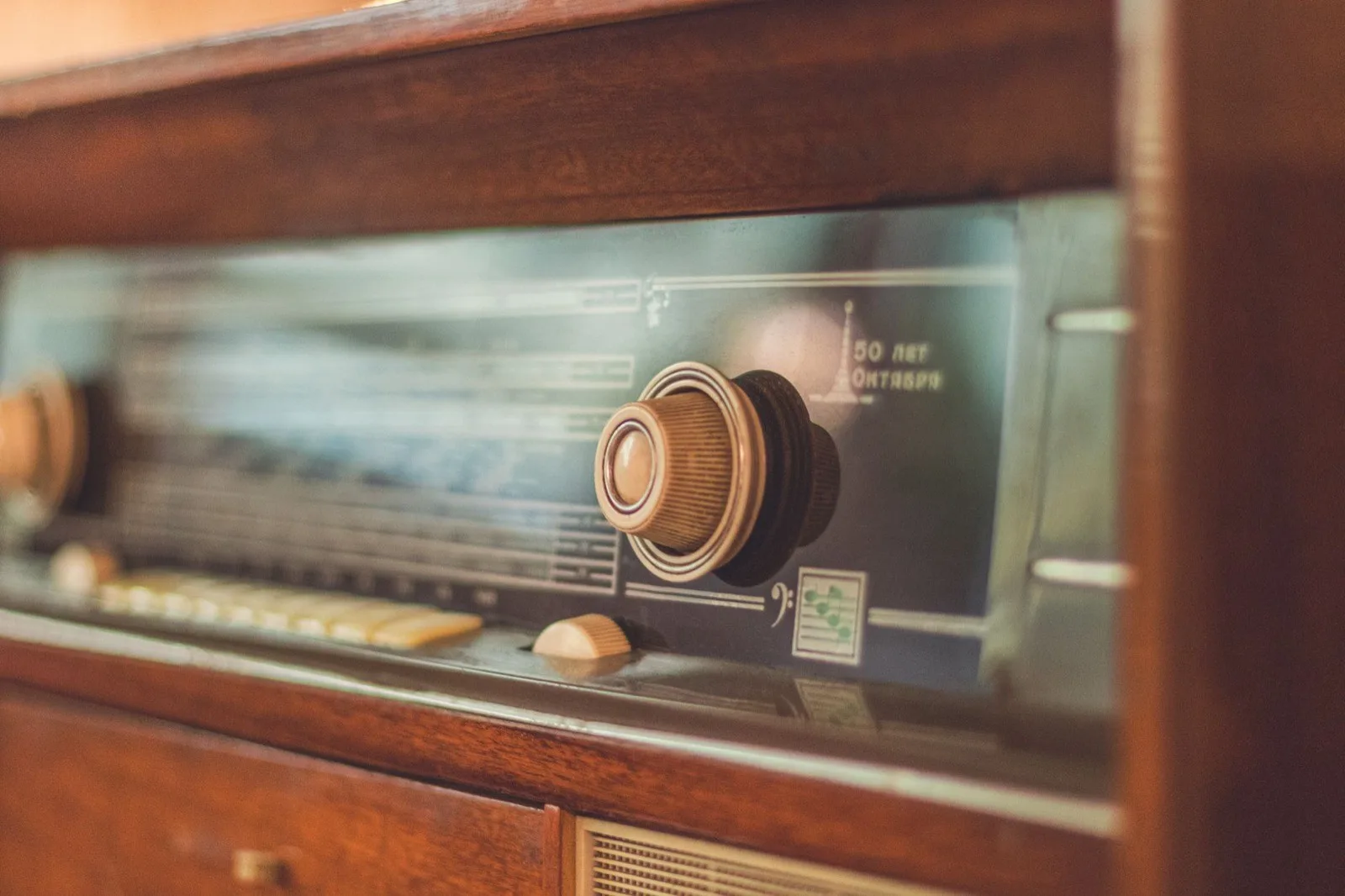
Free, legal, and someone else’s taste. Photograph: Alik Iso / Pexels.
“Can I play music in my business from an app instead?”
This is the question underneath the question, and the exemption has nothing to say about it.
§110(5)(B) is written around a transmission — a broadcast someone else is licensed to send out, which you are merely receiving on ordinary equipment. A playlist is not a transmission you receive. It is a performance you choose and control. The moment the sound in your shop comes from a streaming app rather than a tuner, the statute stops applying, at any square footage, with any number of speakers.
Consumer streaming subscriptions are a separate matter again, and a contractual one rather than a copyright one. The personal subscription on your phone is licensed to you for personal use. That is the shape of every consumer music subscription: the permission granted is narrow by design, and a room full of paying customers is not personal use. It is worth reading the terms of whatever you currently pay for — the relevant sentence is usually in the first section, and it is short.
Worth separating the two risks, because they are not the same size. Using a personal subscription commercially is a contract problem: the account can be closed. The public performance right is the copyright problem, and it exists regardless of where the music comes from — radio, app, CD, or a laptop. Only the broadcast exemption above, or a licence, addresses that one.
So should you just play the radio?
It is a completely legitimate answer, and it is free. Plenty of businesses should.
The honest cost is not legal, it is editorial. You are handing the sound of your room to a programming director in another city. You get their ad breaks, their voice, their playlist decisions, and the same twelve songs everyone else is hearing. For a hardware store that is irrelevant. For a café whose whole proposition is how it feels to sit there, it is a real thing to give away.
The trade is simple enough to state: the radio route is free and generic; a licensed music service costs money and is yours. Which side of that you land on depends on how much the sound of your room matters to what you sell.
The short version
The homestyle exemption is real and free. Under 3,750 square feet for food and drink, under 2,000 for everyone else, and below that line your speaker count is irrelevant. Above it, six speakers and four per room. But all of it applies only to FCC-licensed broadcast — the moment you switch from the radio to a playlist, none of it protects you, at any size.
For the full picture, including what you owe if the exemption doesn’t reach you: what the law actually says about playing music in your business.
17 U.S.C. §110(5)(B) quoted and verified July 2026, cross-confirmed against Congressional Research Service report RS21107. Nothing here is legal advice.